
Our Mission and History
-
-
MISSIONSt. Nicholas, founded in 1900, is the first and oldest Croatian Catholic church built in America. Our cultural roots foster a strong faith in Jesus Christ and
deep devotion to his Blessed Mother.
The breathtaking murals by Maxo Vanka inside our church inspire us
to honor and protect our Croatian heritage and religious traditions.
Through the sacraments—especially the Eucharist—we are supported and encouraged as we work to share faith, hope, and love with a heartfelt welcome to everyone that enters our church.
-
-
-
OUR HISTORY & HERITAGE
St. Nicholas Church is one of the 2,600 National Historic Places that illustrate the heritage of the United States.
For over
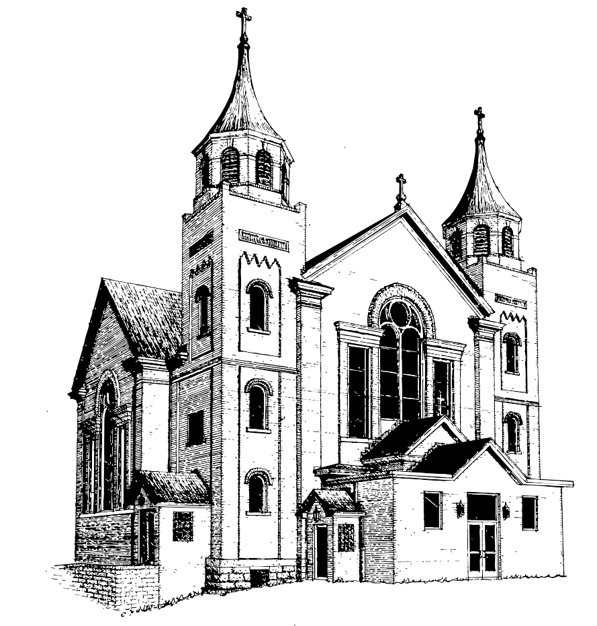 125 years, St. Nicholas Church has showcased the Croatian American community’s determination and unity. Parishioners built a lasting institution that continues to serve its congregation with faith and service.
Generations of Croatian immigrants and their families have marked important religious milestones of baptisms, communions, confirmations, marriages, and memorials at St. Nicholas Church, highlighting its enduring role in the community.
Today, as a small parish, we remain committed to fostering foundational spiritual growth and warmly invite you to be part of our shared future.
-
-
-
OUR NOTABLE HISTORY
 CROATIAN IMMIGRATION TO PITTSBURGH ESTABLISHES THE FIRST CROATIAN PARISH IN AMERICA 1894
As Croatian immigrants arrived in Pittsburgh for steel and mining jobs, St. Nicholas Croatian Parish Northside (Allegheny) was established in 1894 -marking the first Croatian Parish in America. Masses were celebrated in an old, closed Elks club but as Croatian immigrant numbers grew, the need for a second parish became clear. Given the concentration of the newest immigrants in Etna, Millvale, & Lawrenceville, Bennet Hill in Millvale was selected. The land on Bennet Hill was purchased in October 1899 from William J. Mellon for $7,500.
ONE CROATIAN PARISH BECOMES TWO ESTABLISHED CHURCHES 1899
Bennet Hill had an existing farmhouse that was repurposed as a rectory while the first Mass was celebrated on March 4, 1899, in a remodeled barn. Following careful evaluation, the decision was made to construct the church on the site of the rectory (previously a farmhouse). The house was relocated at a cost of $1,035, thereby clearing the area for the church to be built atop the hill as initially intended. Through much discussion and changing plans, on June 3, 1899, the contract was signed to build the church. The church structure was designed by Pittsburgh architect Frederick C. Sauer in the Romanesque Revival style, with the Murphy Brothers as contractors. The church cost approximately $34,000 to construct with an additional $2,360 for the pews and the bells.
DEDICATION AND BLESSING OF ST. NICHOLAS CHURCH MILLVALE 1900 - FIRST CROATIAN CHURCH CONSTRUCTED IN AMERICA
 Our Founding Dedication Plaque in English Reads:
CHURCH OF ST. NICHOLAS IN MILLVALE, PA
Built and Consecrated Year 1900
Under Bishop Right Reverend. R. Phelan
and with the Parish Priest Rev. F. Glojnaric
Loyal Croats-Raised Catholics
This Temple Is for God's Honor and Glory of God to Our Own Pride and Salvation.The cornerstone of the church was dedicated on May 15, 1900 and construction began - making it the first Croatian church constructed in America. On November 25, 1900, assembled on “the hill” to celebrate its first Holy Mass, the Croatian immigrants were finally able to see their dreams realized. The community was finally able gather and celebrate in the Romanesque style splendor of their church, enhanced by the gift of a $2,000 organ from industrialist Andrew Carnegie. Subsequently, St. Nicholas Northside church also got their church with the cornerstone being dedicated in 1901.
 The organ donated by Andrew Carnegie to St. Nicholas Chruch in 1900
ST. NICHOLAS CEMETARY IS ESTABLISHED 1915
The Millvale parish negotiated with the diocese to receive permission to buy land on of the highest point in Troy Hill to be used as a burial plot. The blessing of the land took place on December 16, 1915, with many Croatian and Slovenian organizations taking part in the parade to celebrate.
ST. NICHOLAS CHURCH 1920 St. Nicholas Altar circa 1920
Twenty years after its founding, the Croatian immigrants enjoyed a church built in the land of their future and were not aware of a coming tragedy.
 St. Nicholas rear of the Church - showcasing the rare electric lights circa 1920
THE CHURCH IS DESTROYED BY FIRE 1921
 St. Nicholas Altar After the Fire
On March 26, 1921, at 2:00am, a fire destroyed the church in Millvale. Everything was burned, including the donated organ by Andrew Carnegie, except a statue of the Virgin Mary, which remained standing at the altar. Following the fire, the Parish built a provisory altar in the church hall and held services there until the church could be rebuilt.
OUT OF THE ASHES THE CHURCH IS REBUILT 1922With insurance money from the fire, plans to build a new church were drawn up almost immediately. Again, architect Frederick C. Sauer created the plans and construction began. Many parishioners were employed in trades and helped to rebuild the church. The dedication of the new structure took place on Memorial Day, May 30, 1922
THE HOLY ROSARY SOCIETY ESTABLISHED IN 1924
In the 1920’s, the world was still suffering from the aftermath of World War I and a fragile state of peace was on everyone’s mind. Based on the Blessed Mother appearance to St. Bernadette at Lourdes, asking for prayer for peace, this plea for prayer inspired a group of women in 1922 to meet regularly to say the rosary. From this initial group, the Holy Rosary Society was officially formed in 1924. It has served as a bulwark of prayer, May Crowning and fundraising for the church for more than 100 years and still remains active today. Learn more about this inspring groups history at History of the Holy Rosary Society
FATHER ZAGAR APPOINTED PASTOR AND SAVES THE CHURCH FROM A SHERIFF’S SALE 1931
In 19
 Fr Zagar31, Father Albert Zagar T.O.R., was assigned to St. Nicholas parish. He was born in Slovenia in 1893 and came to America in 1926. He spoke nine languages and was known for having “his own brand of English.” A principled man with a sense of justice who refused to preach Fascism as a young priest in Italy, resulting in his deportation, he embodied the spirit of the Croatian people, hardworking, honest, strong and reliable. By 1930, the church was in serious debt and in danger of closing. Father Zagar went to work and engaged the Holy Rosary Society for assistance in relieving this debt. Under Father Zagar the Holy Rosary Society membership grew to 250 and members sought contributions from businesses, organizations, and private citizens. Father Zagar credited the Holy Rosary Society members with playing a significant role in lowering the church’s debt. With Father Zagar’s energetic and business-like efficiency, combined with his love for his people and zeal for God’s work, he was able to save the parish from a sheriff’s sale.
ST. NICHOLAS CEMETERY EXPANDS 1945
Father Zagar’s careful management allowed the joyous burning of the mortgage in front of the entire parish in 1945, marking freedom from debt. This allowed the Parish to expand St. Nicholas cemetery an additional 14 acres by purchasing the adjacent land to the original cemetery.
FATHER ZAGAR INVITES CROATIAN ARTIST MAXO VANKA TO CREATE MURALS 1937-1941
 The white walls of St. Nichoals prior to the murals circa 1935Following the fire, and quelling the church’s debt, Father Zagar wanted to address the white walls of the church that had remained so for approximately 15 years. Father Zagar, a Franciscan priest of artistic taste and progressive politics, put the word out in the Croatian immigrant community to find someone to create murals for the church. This resulted in Louis Adamic, a prominent Slovenian-American author, journalist, and editor known for chronicling the immigrant experience, living in New York at that time, receiving a letter from Father Zagar. The letter asked Mr. Adamic to see if he knew how to reach Croatian artist, Maksimilijan "Maxo" Vanka, whose work he had seen in Vanko’s solo exhibition in Pittsburgh in May 1935 at the Wunderly Brothers Gallery. Father Zagar was credited with saying about Vanka, “When I heard of Maxo Vanka the artist – one of our people, a Croatian living in New York – I immediately sent him a wire: Come Friday! Come Sunday!” and he came right away. In Vanka’s visit to Millvale, he was impressed with Father Zagar as a smart, simple, and direct person. Adamic remembered Vanka’s reaction, stating Father Zagar was a “true follower of Saint Francis of Assisi.” Remarkable for church art at that time, Vanka was assured by Father Zagar that he would have complete artistic freedom, “so long as, at least, some of the pictures were to be of religious nature.”
 Maxo Vanka Painting Mary on the Battlefiled Mural 1941Upon Vanka’s arrival to Millvale, Father Zagar told reporters, “We want murals that would tell the story of this parish, of the people.” Thus, in two campaigns in 1937 and 1941, Vanka created murals of biblical themes and commemorated the contributions of Croatian immigrants to American industry & society while also depicting satirical attacks on capitalists who fell from favor in the society conscious climate of the 1930s. He returned a final time in 1950 to complete painting on the front of the organ loft.
No better tribute can be given to
 The vibrant walls after the murals Father Zagar than when Vanka said, “Fr. Zagar was one priest in one hundred thousand courageous enough to break with tradition, to have his church decorated with paintings of modern, social meaning”. Vanka’s admiration resulted in Father Zagar being painted into a mural behind the altar entitled, “Immigrant Workers presenting St. Nicholas Church to the Virgin” also known as "Croatians in the New World."
To summarize the murals in their entirety, Maxo Vanka once described them as, “Divinity became human so that humanity might become divine.”
Learn More About the Murals' HistoryLearn More About Father Zagar & the Role he Played in the Murals
ST. NICHOLAS BUILDS AN OUR LADY OF LOURDES GROTTO 1947
 The original Špilja Gospe Lurdske, or Our Lady of Lourdes Grotto, was built, dedicated, and celebrated on October 5, 1947. It fulfilled a 10-year vision of Father Albert Zagar, fulfilled with the help of the Holy Rosary Society and was bult in what is now the corner church-side parking lot closest to the rectory, near the edge of the hill.To pay homage to the spring Saint Bernadette discovered, in front of the grotto was a pond fed by water that flowed unseen from the grotto into a small stream and then into a pond. The bronze statues of the Blessed Mother and Saint Bernadette that graced the Grotto were donated and dedicated by parishioners. Sadly the Grotto was crumbling over the hillside and removed to make way for a school bus garage. Today, you can visit the bronze statues in the open far end of the rectory.
ST. NICHOLAS GOLDEN JUBILEE 1950
The Golden Jubilee of St. Nicolas was commemorated with a Pontifical Mass on November 5, 1950, presided over by Coadjutor Bishop John Dearden. Msgr. Ivan Stipanovich of Youngstown, Ohio, who delivered the sermon in Croatian. The evening concluded with a banquet at the church hall featuring music performed by the Duquesne Tamburitzans. The program ended with remarks from Fr. Albert Zagar, the incumbent pastor.
LOCAL HISTORICAL LANDMARK RECOGNITION AND U.S. NATIONAL HISTORIC PLACES
RECOGNITION 1980

St. Nicholas is listed in the National Register of Historic Places and recognized by the Pennsylvania Historical & Museum Commission via the Pittsburgh History and Landmarks Foundation. Notably for the first time, the Pittsburgh History and Landmarks Foundation created a special category in order to recognize and protect the Vanka church murals.
THE CREATION OF THE SOCIETY FOR THE PRESERVATION OF THE MURALS OF ST. NICHOLAS MILLVALE (SPMMMV) 1990
In 1990, St. Nicholas church members formed the Society for the Preservation of Murals of St. Nicholas Church, Millvale Maxo Vanka (SPMMMV) to ensure that the murals remain a lasting tribute to the man who painted them and to the people who inspired them. In 1991, this group was incorporated as a 501C3 and is now operated under separate management from the church. SPMMMV, now known as Vanka Murrals, provides guided tours for groups to view and learn about each of the 25 murals. They also use grants to preserve and restore the murals. Visit SPMMMV Visit SPMMV & Book a Tour or Donate to Preserve the Murrals
1994 TWO ST. NICHOLAS CHURCHES BECOME ONE PARISH AGAIN
 St. Nicholas Church Northside
1901-2004In 1994, as part of the Diocese's Reorganization program, St. Nicholas Millvale and St. Nicholas North Side reunited as one parish with two worship sites, bringing together the Croatian- American community after 94 years. In 2004 St. Nicholas Northside was officially closed and in 2013 demolished to make way for Route 28 expansion. A new grotto was built with the statue of Our Lady of Lourdes with a seating area, marker, and a brass plaque where the church sanctuary once stood. To learn more about this historic site Visit St. Nicholas Northside Center
2000 ST. NICHOLAS CELEBRATES 100 YEARS
Commemorated on May 21, 2000 by Celebrant Petar Grubisic, Provincial of Croatian Province of St. Jerome, Croatia with remarks from Father Gabriel Badurina, the incumbent Pastor. The day ended with a banquet at the Fox Chapel Yacht Club and the music of the Keystone Tamburitzan Orchestra.

Through the years that followed the North Side St. Nicholas Church closing, ensuing mergers with other churches took please. In 2019, St. Nicholas Church Millvale became part of the newly formed Shrines of Pittsburgh with five other beautiful and historic churches.
 St. Nichoals June 1, 2025 125th Anniversary Mass
2025 ST. NICHOLAS CELEBRATES 125 YEARS
Commemorated on June 1, 2025, by Celebrant Bishop David Zubik with remarks from Father Nicholas Vaskov, the incumbent pastor with Croatia Ambassador to the US, Pjer Simunovic, in attendance. A luncheon following Mass was held at the Camelot Event Center in Wexford, PA.
-
OUR NOTABLE TIMELINE1894The first Croatian Parish in America is founded as St. Nicholas Church, North Side (Allegheny).1889Growing Croatian immigration led to the need to purchase Bennet Hill in Millvale from William J. Mellon for $7,500 to build a second Croatian church.1899The church contract was signed with architect Frederick C. Sauer to design a 550-seat building for about $34,000.1900On May 15, 1900, the cornerstone of St. Nicholas Church Millvale was dedicated.
 Our dedication cornerstone1900The church was completed on November 25, 1900, and received a $2,000 organ donated by industrialist Andrew Carnegie.1915St. Nicholas Church buys the highest point in Troy Hill as a cemetery for parishioners.
 St. Nicholas Church circa 19201921On March 26 at 2:00am, a fire destroyed the church, leaving only the Virgin Mary statue standing on the altar.1922Architect Frederick C. Sauer again designed the church's reconstruction, with parishioners helping build it; the new structure was dedicated on May 30, 1922.1924The Holy Rosary Society was established by a group of women motivated by the Blessed Mother's appearance to St. Bernadette at Lourdes, where she requested prayers for peace. These women came together to recite the rosary with the same intention. This group remains active today.1931Father Albert Zagar is appointed pastor to St. Nicholas and through careful management saves the Church from a Sheriff’s sale.
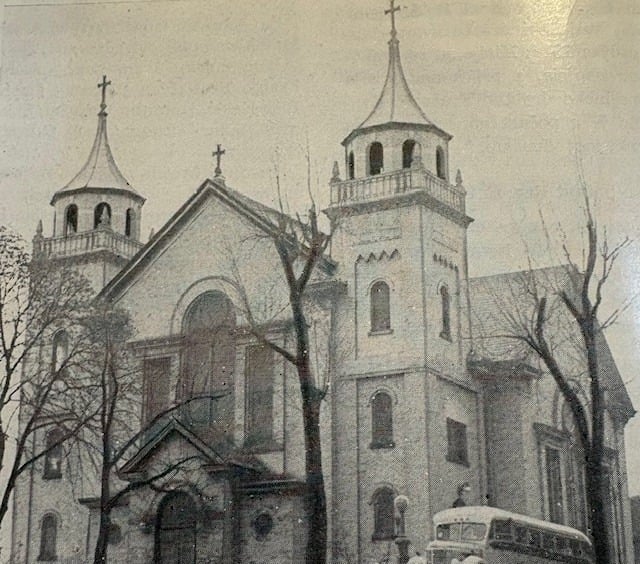 St. Nicholas Church Circa 19311937Father Zagar sought to address the plain white walls of the church and seeks out Croatian artist Maksimilijan “Maxo” Vanka for commissioning of murals.1937Maxo Vanka created the first 11 murals of strong biblical themes and social commentary.1941Maxo Vanka returns to finish the church murals.1945Father Zagar purchases adjacent land and expands St. Nicholas Cemetery.1947St. Nicholas builds its first Our Lady of Lourdes Grotto.1950St. Nicholas celebrates 50 years!1951Maxo Vanka returns to St. Nicholas for the final time to complete painting on the front of the loft.
 St. Nicholas Church 19681980St. Nicholas is listed in the National Register of Historic Places and recognized by the Pennsylvania Historical & Museum Commission via the Pittsburgh History and Landmarks Foundation.1990The Society for the Preservation of Murals of St. Nicholas Millvale (SPMMMV) was established by parishioners to preserve the murals as an enduring tribute to both the artist and those who served as his inspiration. The following year SPMMMV incorporates as a 501C3 and operates under separate management from the church.1994As part of Diocese reorganization, St. Nicholas Northside Parish & St. Nicholas Millvale Parish, after more than 100 years, once again becomes one Parish. In 2004 St. Nicholas Northside was closed and is demolished to make room for Route 8 expansion.2019Diocese consolidations formed the Shrines of Pittsburgh, making St. Nicholas one of six historic churches in the group.2000St. Nicholas Celebrates 100 years!2025St. Nicholas Celebrates 125 years!
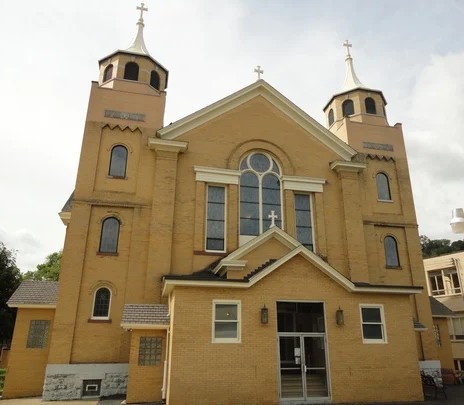 St. Nicholas Church Today
For More History of
St. Nicholas Church, Check out the Vanka Murals Table Talk "Beyond the Brush of Maxo Vanka: Researching the History of St. Nicholas Croatian Chruch" -
-
-
-
THE EVERLASTING LEGACY OF ST. NICHOLAS CHURCH IN MILLVALE
Nestled into a Millvale hillside, St. Nicholas Church rises in humble yellow brick, a quiet witness to faith and heritage. Within its walls, the Vanka murals speak across generations, honoring the Croatian immigrants who built this parish and the enduring grace that may carry their legacy through another hundred years.
-
-
-
Our Front Door Stained Glass
 Enter the center doors of our Church and you will see a Latin statement within the
stained glass.
Domus : Dei Porta : Coeli
“The House of God is the Gate of Heaven”
Consider yourself invited to the gateway!
-